How to Generate Passive Income With Metaverse Land: 9 Ways


Metaverse land is not a dividend. It pays when somebody uses the land: a tenant who needs a venue, a brand that wants attention, a studio that needs somewhere to publish. Buy a parcel and leave it empty, and the only thing it produces is a listing that nobody clicks.
That is the part the 2021 headlines left out. In November 2021, a patch of Decentraland in the Fashion Street area sold for a record $2.4 million worth of cryptocurrency, according to Reuters. Five years later the floors are a fraction of that, and the landowners still making money are the ones treating the parcel as a location with customers, not as a token with a chart.
This guide covers nine ways to earn from metaverse land, what each one actually sells, and how much of the work is passive. It separates the platform mechanics that are documented from the numbers that are negotiated deal by deal, because most of the income figures circulating online are asking prices, not results.
- Key Takeaways
- Understanding Virtual Real Estate
- The Nine Ways, at a Glance
- 1. Rent Your Land by the Day
- 2. Lease a Parcel to a Builder or Brand
- 3. Host Events and Sell Sponsorship
- 4. Sell Billboard and Ad Space
- 5. Flip Land
- 6. Build and Operate a Venue
- 7. Sell Build Services
- 8. License Digital Property
- 9. Hold Tokenized Real-World Property
- What It Actually Pays
- What It Costs and What Can Go Wrong
- Frequently Asked Questions
- Sources
- Conclusion
Key Takeaways
- Most of the nine ways are small businesses, not passive income. Rentals and royalties are the closest to passive; events, venues, advertising sales and builds are service work.
- Decentraland has native LAND rentals. The owner sets a daily price in MANA and a period between 1 and 365 days, and the tenant pays the whole period upfront.
- The Sandbox does not currently support LAND rentals. Its own documentation says renting is not available and that private arrangements are at the owner's discretion.
- The only published rental range in this guide is Decentraland's launch figure: 1 to 1,000 MANA per day in December 2022. Current income depends on location, traffic and the deal.
- LAND is an NFT with a fixed supply, but a fixed supply is not a floor. Both major worlds trade far below their 2021 peaks.
Understanding Virtual Real Estate
Virtual real estate is a token that points to a coordinate in a 3D world. In Decentraland, Genesis City is a fixed grid of 90,601 parcels, each 16 by 16 metres. In The Sandbox, the map holds 166,464 LAND, each with a 96 by 96 block base where one block is one metre. The token is the ownership record; the world is the software that renders it.
That distinction matters when you calculate income. You do not own the servers, the client or the rules. You own a transferable token that the platform agrees to recognise, and the platform can change how publishing, rentals or fees work. The land is real enough to sell; it is not real estate in the sense that a flat is.

There are also two different assets in the same conversation. Metaverse land is a coordinate inside a game world. Tokenized real estate is a token backed by a physical property, often through a special-purpose vehicle. The first pays when someone uses the location; the second pays when a tenant pays rent. They share a vocabulary and almost nothing else.
Finally, "passive" needs a definition. A rental that requires pricing, listing, vetting and occasional repair is semi-passive. A venue that needs programming, promotion and staff is a business. A royalty is passive after the work is done, but the work comes first. The nine ways below are labelled on that scale, not on the promise in the headline.
The Nine Ways, at a Glance
Here is the whole article in one table. The last column is the honest part: how much of the income arrives without you working on it.
| Way | What you sell | Who pays | How passive |
|---|---|---|---|
| 1. Daily rental | Use of a parcel for a fixed period | Tenants on the platform marketplace | Closest to passive |
| 2. Long lease | A longer exclusive right to a parcel | Builders, brands, studios | Semi-passive |
| 3. Events | Access, sponsorship, venue hire | Attendees and sponsors | Not passive |
| 4. Advertising | Attention on a wall or billboard | Advertisers | Semi-passive |
| 5. Flipping | The parcel itself | Another buyer | Not passive |
| 6. Venue | A destination with a reason to visit | Visitors, tenants, sponsors | Not passive |
| 7. Build services | Design and deployment work | Landowners and brands | Not passive |
| 8. Licensing | Rights to use original IP | Marketplaces and licensees | Closest to passive |
| 9. Tokenized property | A share of real-world rental income | Tenants, via the issuer | Intended to be passive |
1. Rent Your Land by the Day

Decentraland is the clearest case because the rental is native. The owner lists a parcel or an Estate in the Marketplace, sets a price per day in MANA, and chooses which rental periods to allow: 1, 7, 30, 60, 90, 180 or 365 days. The tenant pays the whole period upfront. The contract transfers operator permission to the tenant, which is the right to deploy a scene, while ownership and voting power stay with the landlord. The land cannot be sold while the rental is active.
What it pays: the platform does not publish a current rate. When rentals launched in December 2022, Decentraland reported listings from 1 to 1,000 MANA per day, across parcels and estates of up to 61 LAND. That is a launch snapshot, not a yield. A parcel in a quiet corner can sit unrented for months; a parcel beside a busy plaza can be booked continuously.
What it takes: a parcel someone wants, a listing with a realistic daily price, and a tenant who can deploy. The work is pricing, answering enquiries and checking that the tenant leaves the scene in a usable state. It is the closest thing to passive in this list, but it is not a dividend.
2. Lease a Parcel to a Builder or Brand
A lease is the private version of a rental: a longer period, a specific tenant, and terms negotiated outside the marketplace. A game studio needs a cluster for a season; a brand needs a hub near a busy district; an event series needs the same address for six months. The landlord supplies the location and sometimes the build; the tenant supplies the audience or the production.
What it pays: there is no platform rate. The number depends on the location, the duration, what is included and who needs whom more. Treat any figure you see online, including the ones in competitor articles, as a listing or an anecdote until the contract says otherwise.
What it takes: a contract, a tenant with a real budget, and a way to handle publishing permissions. On The Sandbox this is more delicate. The official documentation says LAND renting is not currently supported, and that a private arrangement must put the LAND, the Experience and the assets in the same wallet to publish. That is an operational risk to price into the deal, not a detail to leave to a Discord message.
 Why Do Money Mantras Drive Investment Triumphs?
3. Host Events and Sell Sponsorship
An event turns a parcel into a venue for an hour or a weekend. The revenue can come from tickets, from a sponsor who wants the audience, or from renting the venue to a brand that brings its own production. Concerts, product launches, conferences and themed parties all fit; the common ingredient is a reason for people to show up.
What it pays: ticketing and sponsorship are negotiated per event. There is no platform fee schedule for either. The costs are real: a build that can handle a crowd, promotion, moderation, and the time of the people running it.
What it takes: an audience, or a sponsor who believes you can deliver one. This is the least passive path in the list, and the one most likely to produce a memorable result. It is event work with a virtual venue, not a yield.
4. Sell Billboard and Ad Space
Advertising is the simplest version of the same idea: someone pays for attention. The landowner rents a wall, a billboard or a branded build in a place with foot traffic. The advertiser gets a placement; the landlord gets a fee for the period.
What it pays: there is no platform-set rate. The price is a private deal based on traffic, visibility, the size of the placement and the duration. That also means a fixed monthly rate quoted in an article is a listing or an example, not a market price. Ask for the traffic data before you believe it.
What it takes: a parcel people actually pass, a build that can display the creative, and a way to show the advertiser what they got. The work is sales and reporting; the income is semi-passive once the contract is signed.
 Why Does Vibration Influence Your Money Attraction?
5. Flip Land
Flipping is the path everyone understands: buy a parcel before the area becomes popular, sell it after. The profit is a capital gain, not cash flow. You do not need a tenant, a build or an audience; you need a buyer who agrees with your price.
What it pays: whatever the next buyer pays. The evidence cuts both ways. In November 2021, a Decentraland estate in the Fashion Street area sold for a record $2.4 million worth of cryptocurrency, according to Reuters. By November 2026, the cheapest Decentraland LAND was around 0.034 to 0.037 ETH and the cheapest Sandbox LAND around 0.02 ETH, according to CoinGecko and OpenSea. A floor is not a valuation, and a thin order book means one sale can move it.
What it takes: timing, liquidity and the tolerance to hold through a drawdown. This is the riskiest way in the list, and the least passive. If you would not buy the parcel for the use case, do not buy it for the flip.
6. Build and Operate a Venue
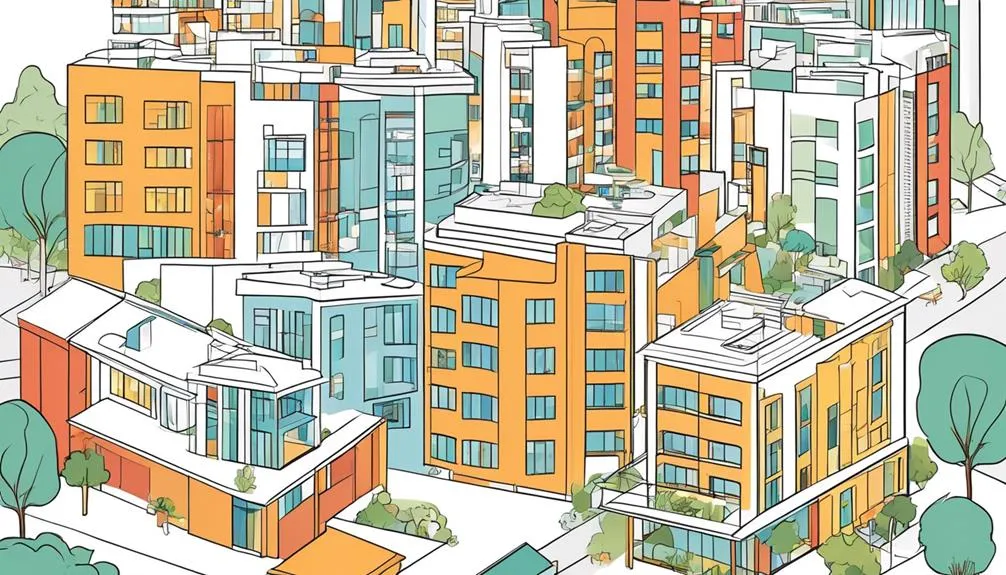
A venue is a parcel with a reason to return: a club, a gallery, a shop, a game, a members' space. The landowner, or a tenant, builds the experience and then runs it. Revenue can come from entry, from renting space inside it to other creators, from concessions, or from a brand that sponsors the programming.
What it pays: it depends on the traffic the venue creates. There is no platform yield. The costs are a build, a launch, a calendar and the work of keeping the place alive. A venue with no events is an empty room with a URL.
What it takes: a build, a programmer, and a reason for people to come back. This is a small business. It can pay well, but calling it passive is a category error.
7. Sell Build Services
You do not need to own land to earn from it. The landowners, brands and event teams need people who can design and deploy scenes, optimise them for visitors, and fix them when the client changes the brief. That is a service business, and it is paid per project.
What it pays: a quote per project. There is no public rate card, and any single figure you see online is one studio's anecdote. Scope, complexity, timeline and who carries the risk set the price.
What it takes: 3D and SDK skills, a portfolio, and a client who trusts you with their parcel. The advantage is that you get paid before you buy an asset, and you learn how the platforms work on someone else's land. For a first step into the niche, this is usually the lowest-risk path.
 10 Mobile Apps for Effortless Passive Income Generation
8. License Digital Property
If you create something reusable, a character, a wearable, a design system, a branded asset, you can license it and earn when it sells. Decentraland's marketplace pays creators 97.5% of primary sales and 2.5% royalties on secondary sales, according to its documentation. The platform takes the other 2.5% of the primary sale.
What it pays: a percentage per sale, not a salary. The income arrives after the work and depends on how often the asset resells. Publishing a wearable or emote carries a publication fee, and the Foundation has covered part of it during some programmes.
What it takes: original IP, a marketplace that supports the asset, and patience while the catalogue finds buyers. This is the closest to passive income in the list, with the important caveat that the work comes first and the royalty can be zero.
9. Hold Tokenized Real-World Property

Tokenized real estate is the other meaning of the phrase. Instead of a coordinate in a game, you buy a token that represents a share of a physical property, often through a platform that pools the asset and distributes rent. The income model is the familiar one: rental yield plus any change in the value of the underlying property.
What it pays: it depends on the issuer, the property, the occupancy and the fee stack. There is no platform-wide rate, and the token is not a substitute for reading the legal structure. Some platforms require KYC; some are restricted by jurisdiction.
What it takes: due diligence on the issuer, the property and the exit. This is a different asset class from metaverse land, and it belongs in the list because the search term covers both. It is intended to be passive, but it carries issuer, liquidity and regulatory risk that a LAND rental does not.
What It Actually Pays
Here is what is published, and what is not. The gap is the point.
| Path | Published number | What it does not tell you |
|---|---|---|
| Decentraland daily rental | 1 to 1,000 MANA per day at launch, December 2022 | Current occupancy, location premium, tenant demand |
| The Sandbox LAND (primary sale) | 1,011 SAND standard, 4,683 SAND premium in direct sales | Secondary price; renting is not supported |
| Decentraland LAND (secondary) | About 0.034 to 0.037 ETH floor, November 2026 | What a specific parcel is worth; the floor is the cheapest listing |
| The Sandbox LAND (secondary) | About 0.02 ETH floor, November 2026 | Same caveat; thin volume can move the floor |
| Advertising, events, builds | No platform rate | Every figure is a negotiated deal |
| Tokenized real estate | Issuer-specific | Fees, vacancy, legal structure |
Anyone who quotes a monthly income for metaverse land is quoting a deal, a listing or a hope. The only published rental range in this guide is Decentraland's launch snapshot, and it describes asking prices at one moment in 2022, not results. A serious model starts with the cost of the parcel, the cost of the build, the share of the year it is occupied and the fee stack. If those four numbers do not work, the headline does not save it.
 Creating Your Passive Income Portfolio: Expert Insights
What It Costs and What Can Go Wrong
The costs are easy to underestimate because the headline price is only the entry ticket. On Decentraland, the Marketplace charges a 2.5% MANA transaction cost on sales, set by the DAO, and Ethereum gas applies to the on-chain steps. On The Sandbox, official LAND sales run on Polygon, but secondary markets and bridging add their own costs.
Then there is the cost of making the land useful: a build, a launch, promotion, moderation and the time to manage tenants or clients. A parcel with no build and no traffic has no income, whatever the floor says.
The risks are structural. Liquidity is thin, so a sale can take weeks and a single listing can move the floor. Platform rules change: The Sandbox does not support LAND rentals today, and Decentraland's rental terms are set by its contracts and governance. The 2021 prices were a peak, not a baseline; both major worlds trade far below those levels. And the word "passive" hides the operating work that makes the difference between a listing and a business.
None of that makes the niche worthless. It makes it a business with a real asset behind it, which is a better starting point than a promise.
Frequently Asked Questions
Can you make money with virtual real estate?
Yes, but not by owning it and waiting. The income comes from renting the land, hosting something on it, advertising on it, building for someone who owns it, or licensing an asset. Each of those is a small business with costs. The land is the location, not the yield.
Is virtual real estate passive income?
Mostly no. A daily rental is semi-passive: the platform handles the contract, but you set the price and carry the vacancy. Royalties are passive after the work is done. Events, venues, advertising sales and build services are active work. Treat "passive" as a scale, not a binary.
How much does metaverse land cost?
It depends on the world and the parcel. In November 2026, the cheapest Decentraland LAND was around 0.034 to 0.037 ETH and the cheapest Sandbox LAND around 0.02 ETH, according to CoinGecko and OpenSea. The Sandbox's official direct sales list standard LAND at 1,011 SAND and premium LAND at 4,683 SAND. A parcel in a busy district costs more than the floor, and the floor is the least desirable listing, not the average.
Can you rent land in The Sandbox?
Not through an official rental system. The Sandbox's own FAQ says LAND renting is not currently supported and that any arrangement is private, at the owner's discretion. To publish an Experience, the LAND, the Experience and the assets must be in the same wallet, so a private lease has to solve that operationally. Price the risk accordingly.
How do you rent land in Decentraland?
List the parcel or Estate in the Marketplace, set a price per day in MANA and choose the rental periods. The tenant pays the full period upfront and receives operator permission to deploy a scene. Ownership and voting power stay with you, and the land cannot be sold while the rental is active. When the period ends, you can claim the land back or list it again.
How much can you make from metaverse land?
There is no published yield. The only official range is Decentraland's launch snapshot of 1 to 1,000 MANA per day in December 2022, which describes listings at that moment. A realistic estimate needs the purchase price, the build cost, the occupancy rate, the fee stack and the price the market will pay. Anyone who gives you a monthly figure without those is guessing.
Sources
- Decentraland documentation: LAND Rentals
- Decentraland: LAND rentals launch, December 2022
- Decentraland documentation: Marketplace
- Decentraland: Terms of Use, marketplace transaction cost
- The Sandbox documentation: LAND FAQ
- The Sandbox: LAND sale prices
- Reuters: virtual real estate plot sells for record $2.4 million, November 2021
- CoinGecko: Decentraland LAND floor
- CoinGecko: The Sandbox LAND floor
Conclusion
The nine ways have one thing in common: the land has to be useful to someone. A tenant needs a venue, an advertiser needs attention, a brand needs a build, a buyer needs a reason to pay more than you did. The token is the ownership record; the income is the use.
If you already own land, start with the simplest use that fits it: a daily rental, a lease, or an event. If you do not own land, sell the service first. The build, the event or the ad deal pays before you take on the asset risk, and it teaches you which parcels are actually worth buying.
 Top Passive Income Side Hustles for Effortless Earnings
If you want to know other articles similar to How to Generate Passive Income With Metaverse Land you can visit the Money category.
Leave a Reply
You must be logged in to post a comment.
This is also interesting